
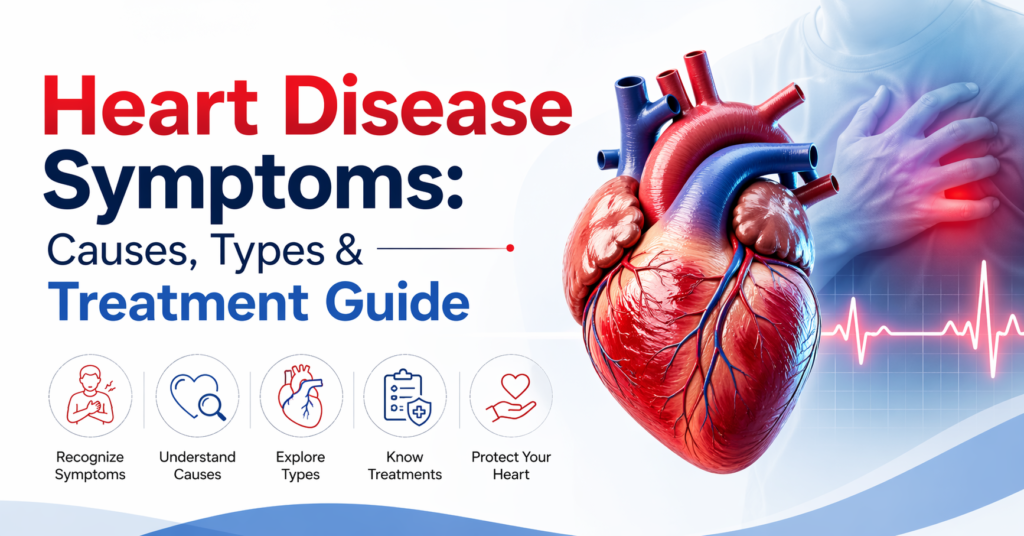
Heart problems don’t always arrive with a dramatic warning. Sometimes, it starts quietly — a little fatigue, slight chest discomfort, or breathlessness you ignore for weeks. Understanding heart disease symptoms early can make a real difference between timely treatment and serious complications.
This guide breaks everything down in a simple way — symptoms, causes, types, and what you can actually do about it.
Heart disease is not just one condition. It’s a broad term used for problems that affect how your heart functions. This includes blocked arteries, valve issues, irregular heartbeat, or even weakened heart muscles.
In simple words:
Anything that stops your heart from working smoothly falls under heart disease.
Not all symptoms look like what you see in movies. Here are the most common ones people experience:
1. Chest Pain or Discomfort
This is the most known symptom. It may feel like:
Don’t ignore even mild, recurring discomfort.
2. Shortness of Breath
If you feel breathless while doing normal activities like walking or climbing stairs, it could be a sign your heart isn’t pumping effectively.
3. Extreme Fatigue
Feeling unusually tired even after rest?
This often happens when the heart cannot supply enough oxygen to the body.
4. Irregular Heartbeat
These may indicate rhythm disorders.
5. Swelling in Legs, Ankles, or Feet
Fluid retention happens when the heart struggles to circulate blood properly.
6. Dizziness or Fainting
Sudden dizziness can mean reduced blood flow to the brain.
Women often experience less obvious symptoms like:
This is why many cases go unnoticed.
Heart disease develops over time. It’s usually a mix of lifestyle and medical factors.
Major Causes:
These factors damage blood vessels and increase strain on the heart.
Understanding types helps you connect symptoms with possible conditions.
1. Coronary Artery Disease (CAD)
The most common type.
Occurs when arteries get blocked due to plaque buildup.
Leads to chest pain and heart attacks.
2. Heart Valve Disease
Valves control blood flow in the heart. When damaged:
Causes breathlessness and fatigue.
3. Arrhythmia (Irregular Heartbeat)
The heart beats too fast, too slow, or irregularly.
4. Cardiomyopathy
A disease of the heart muscle that makes pumping blood difficult.
5. Congenital Heart Disease
Heart problems present from birth.
Doctors don’t rely on symptoms alone. They use tests like:
Early testing can detect problems before they become serious.
Treatment depends on the type and severity of the condition.
1. Lifestyle Changes
This is the foundation of treatment:
2. Medications
Doctors may prescribe:
3. Non-Surgical Procedures
Used to open blocked arteries.
4. Surgical Treatments
In severe cases:
You don’t have to wait for symptoms.
Simple steps:
Don’t wait for symptoms to become severe.
Seek medical help if you notice:
If you’re looking for expert consultation, you can explore experienced specialists here:
https://www.tietenmedicity.com/service/best-cardiologist-in-thane/
Early consultation can prevent long-term complications.
Heart disease often progresses silently. By the time symptoms become obvious, damage may already be significant.
Early diagnosis means:
Many patients ignore mild symptoms thinking it’s just fatigue or stress. But in reality, these are often early warning signs.
Listening to your body is the first step toward prevention.
Heart disease is not something that happens overnight. It builds slowly — and gives signals along the way. Recognizing heart disease symptoms early can save your life or someone close to you.
Don’t wait for a major event to take action. Small awareness today can prevent serious complications tomorrow.
For expert advice and proper diagnosis, you can consult specialists here:
https://www.tietenmedicity.com/service/best-cardiologist-in-thane/
The earliest signs often include chest discomfort, fatigue, and shortness of breath during normal activities.
Yes, many people don’t experience noticeable symptoms until the condition becomes serious.
Not always, but recurring or intense chest pain should never be ignored.
If fatigue is persistent and comes with breathlessness or dizziness, it may be linked to heart issues.
Yes, women may experience subtle symptoms like nausea, back pain, and extreme tiredness.
Yes, especially if they have risk factors like obesity, smoking, or a family history.
Maintaining a healthy lifestyle, regular exercise, and routine checkups are the most effective ways.
If you notice repeated symptoms like chest discomfort, breathlessness, or irregular heartbeat, consult a specialist immediately.